Impart Resources

Impart Product Update - Nov 2025
We’ve delivered a major round of upgrades across the Impart platform, introducing new AI Bot/MCP and LLM Protection dashboards, a refreshed and more intuitive App Experience, a high-performance Inspector v0.42.0 release, expanded Inspector Metrics for deeper operational visibility, and new SQLi and XSS version control, allowing teams to choose between Detection Version 1, Version 2, or always use the latest release. These updates make it easier than ever to understand AI-driven traffic, configure protections with clarity, manage detection behavior with precision, monitor system performance, and optimize your entire Impart deployment.

.png)
Beyond The Prompt: Constraining The Blast Radius Is The Only Way To Secure AI Agents
Prompt sanitization addresses the input layer. Active runtime enforcement addresses the execution layer. For AI agents with access to private data and external channels, only one of those stops a successful attack.
.avif)
Filters





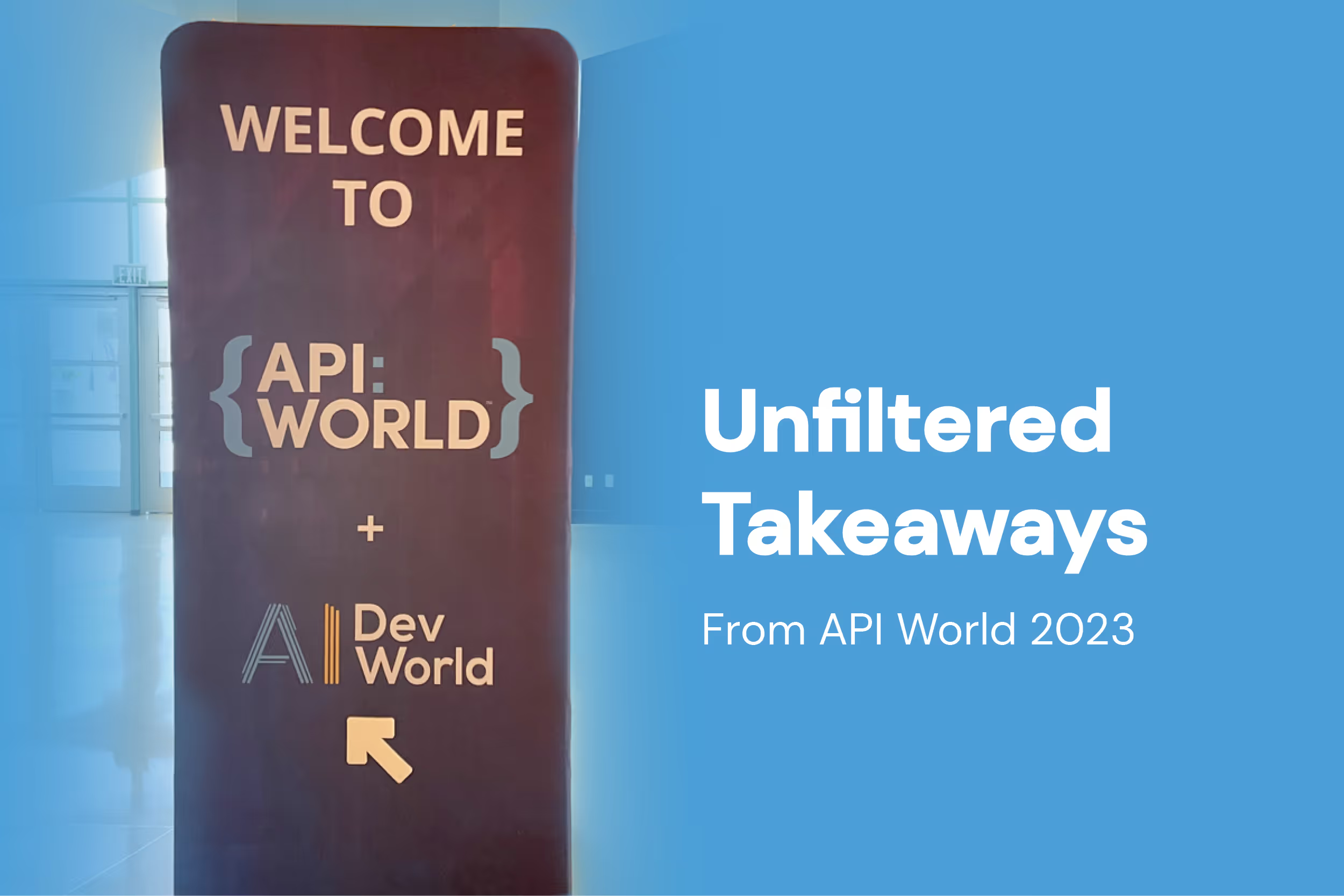
Unfiltered Takeaways from API World 2023
We had a great time at API World 2023! Being immersed in the world of APIs and getting to talk with professionals who are shaping the future of technology was invigorating.Although I saw many innovative things, there were three themes in particular that kept surfacing:
1. Not all developers care about security like I do
2. The staying power of legacy IT such as NGINX
3. AI is Everywhere, But It's Not Always Impressive
.avif)


.png)